
Waterfront vs Golf Homes In Naples: True Costs
Waterfront vs golf course homes in Naples sounds like a lifestyle question, but the real story is in the construction and long-term costs. This guide breaks down lot prep, pilings, FEMA rules, HOA and club requirements, and ongoing ownership costs that quietly shape your custom home budget.
XL Homes Editorial Team
The XL Homes of SWFL editorial team brings you insights on luxury home building, interior design trends, and Southwest Florida living.
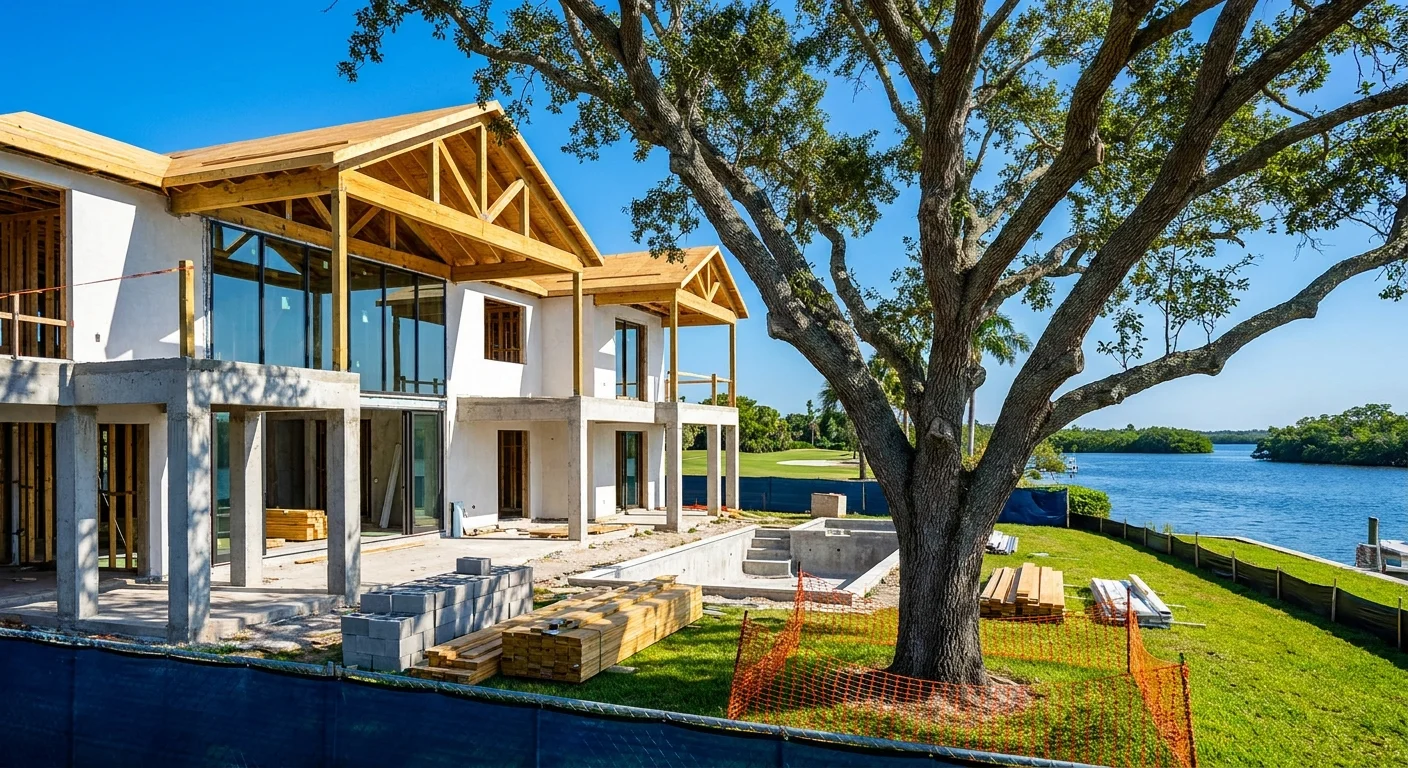
Waterfront vs golf course homes in Naples: why the real cost is in the dirt, not the decor
In Naples, the choice between waterfront and golf course homes sounds like a lifestyle decision. Boat or golf cart, Gulf sunset or 10th fairway. In reality, the biggest difference shows up in your site work, structural design, insurance profile, and long-term ownership costs.
Across XL Homes projects from Port Royal and Aqualane Shores to Grey Oaks and Mediterra, we see one pattern repeat. The sticker price of the lot is only the start. FEMA rules, Florida Building Code, soil conditions, and HOA or club requirements often shift your total project budget by hundreds of thousands of dollars before you pick a faucet.
1. Lot prep: where waterfront and golf course budgets quietly separate
Waterfront lots: fill, elevation, and seawall realities
Most prime waterfront land in Naples sits in FEMA flood zones, especially AE and VE along Gordon Drive, Galleon Drive, and the Aqualane Shores canals. That triggers strict elevation and flood-resistant construction rules, which add real dollars before vertical construction even starts.
According to FEMA guidance, new homes in Special Flood Hazard Areas must build the lowest floor at or above the Base Flood Elevation (BFE), often with additional freeboard required by local code. In practical terms for a Port Royal tear-down, that can mean raising finished floor several feet above the old ranch house next door.
- Fill and compaction: Importing and compacting fill to meet FEMA and Collier County elevation requirements is often a six-figure line item on deep-water lots.
- Seawall coordination: Older seawalls along Naples Bay or Crayton Road canals may need repair or replacement to support new grades and prevent washout of expensive fill.
- Access and barge logistics: Tight canals can complicate heavy equipment access, which drives up mobilization costs.
By contrast, golf course lots in communities like Grey Oaks, Quail West, or Talis Park often start higher and outside the most restrictive coastal flood zones. That usually reduces fill requirements and simplifies site work, even if you still deal with some soil remediation in low-lying sections.
Golf course lots: earthwork and drainage, but fewer flood constraints
Golf communities bring their own sitework challenges, but they are different in character. Often the main issues for XL Homes on course-front lots are drainage, view protection, and existing mature landscaping instead of flood elevation.
- Drainage coordination: You must tie into the community drainage plan so roof runoff does not impact fairways or cart paths.
- Existing berms and landscaping: Many courses have built privacy berms. Modifying them for your view can trigger ARC and club review and sometimes regrading costs.
- Cart path proximity: Where the path hugs the lot line, you may need additional hardscape or low walls to manage privacy and errant golf balls without violating sightline rules.
This is where early due diligence is critical. An Aqualane Shores canal lot might look similar in price to a Grey Oaks fairway lot, but once you add 3 feet of fill, seawall work, and flood-specific engineering, the waterfront site often runs significantly higher before you pour the first footing.
Pro Tip: Ask your builder for a "true site cost" comparison on two specific lots you are considering. Include fill, pilings, seawall or lake bank work, utility relocation, and tree removal. That number is a better decision tool than list price alone.
2. Pilings and structure: how soil and code shift your structural budget
Waterfront pilings: deep support and coastal exposure
Along Naples Bay, the Gordon River, and many canal systems, soils are softer and more variable. XL Homes projects in Port Royal and Royal Harbor almost always need deep foundations, either driven concrete piles or auger-cast piles, to reach bearing strata.
Florida Building Code, which the Florida Building Commission oversees, now embeds coastal wind and flood standards that integrate with International Code Council model codes. In simple terms, waterfront custom homes in Naples must handle stronger lateral forces from wind and water than interior sites.
- More piles, closer spacing: A large two-story waterfront home with expansive glass often needs more piles and a more robust tie-beam and shear wall system to resist uplift and lateral loads.
- Elevated slabs: To meet FEMA and FBC flood rules, you might build on an elevated structural slab over an open foundation or flood vents, which adds concrete and formwork costs.
- Heavier connections: Stainless or hot-dip galvanized connectors and hardware are standard on saltwater sites to combat corrosion over time.
Golf course foundations: still serious, but usually more forgiving
In Grey Oaks, Mediterra, or Pelican Marsh, subsurface conditions are often more predictable. You may still need pilings, particularly for larger homes or near lakes, but counts and depths tend to be lower and engineering simpler than a comparable home on Smuggler's Bay or Treasure Lane.
The same Florida Building Code wind requirements apply across Collier County, but you are not contending with direct wave action or tidal surge. That often translates to:
- Fewer deep foundations and reduced concrete volume
- Less stainless hardware, except in specific exposure zones
- More flexibility to use slab-on-grade where soils permit
Over a 7,000-square-foot home, waterfront structural premiums add up. The cost is justified if you want a yacht in your backyard, but it should be a conscious choice, not a surprise half-way through engineering.
The view you fall in love with on the showing is only half the story. The unseen soil, flood zone, and code requirements underneath that view are what really write the check.
3. View-driven design: glass, privacy, and how orientation affects cost
Waterfront: glass, glare, and Gulf exposure
On the water, the view is the product. XL Homes projects along Admiralty Parade or Kings Town Drive typically maximize long water vistas with 12 to 14 foot sliders, wide-span openings, and large second floor terraces. That shapes the entire structural strategy and envelope budget.
- Impact glass: Large-format impact glazing with narrow sightlines carries a significant premium but is non-negotiable for top-tier coastal homes in Naples.
- Sun and heat: Western exposure over Naples Bay produces dramatic sunsets but also intense solar gain. That means upgraded low-E coatings, shading, and higher-tonnage, zoned HVAC.
- Outdoor living integration: Waterfront buyers often expect a direct visual and physical link between great room, pool, dock, and bay. Pocketing sliders, hidden headers, and flush thresholds add complexity and cost.
If you are dreaming of cutting-edge outdoor environments, study examples like our coverage of top luxury outdoor living spaces in Naples. Many of those ideas scale differently, and cost differently, on waterfront vs golf course sites.
Golf course: views framed, not exposed
On golf course lots, the view is more controlled. Fairways are manicured, lighting is predictable, and your view corridor is defined by the hole layout and lake edges instead of open bay.
- Targeted glazing: Instead of glass on three sides, you often concentrate large openings toward the fairway and use more solid walls on side yards for privacy from neighbors.
- Glare management: Reflections off greens and lakes are less intense than the open Gulf or bay, so you can often balance glass and shading with more flexibility.
- Outdoor rooms: Loggias and lanais can tuck under the main roof with deeper overhangs, which can be more cost efficient than stand-alone pavilions out at the seawall.
This does not mean golf course homes are less luxurious. We see clients in Mediterra investing heavily in outdoor kitchens and fire features, similar to what we outline in top outdoor kitchen designs for Naples luxury homes and outdoor fireplace designs for SWFL luxury homes. The difference is that the fairway context usually lets your dollars go a bit further on structure and sun control, so more of the budget can move into finishes and amenities.
4. FEMA, Florida Building Code, and how regulation tips the scales
FEMA flood zones: where rules hit waterfront hardest
Waterfront parcels fall under more extensive floodplain regulations. FEMA sets the national framework for flood maps, then local authorities like Collier County adopt and sometimes tighten those rules. Builders then must design in compliance to obtain permits and maintain the owner's eligibility for flood insurance.
According to FEMA resources, construction in Special Flood Hazard Areas needs:
- Minimum elevation of the lowest floor at or above the Base Flood Elevation, often with freeboard for additional safety
- Flood damage-resistant materials below the design flood elevation
- Specific venting for enclosed spaces below BFE to equalize hydrostatic pressure
On golf course sites in higher ground communities like Grey Oaks or The Quarry, you may still have ponds and lakes, but the FEMA floodplain constraints are typically less intense. That often simplifies architectural planning and allows more flexibility on ground-floor room layouts.
Florida Building Code and ICC standards: how both home types must respond
All Naples homes must comply with current Florida Building Code, which is based on model codes from the International Code Council. In coastal Collier County, wind speed maps, impact protection, and structural load paths are particularly important.
The Florida Building Commission updates these requirements on a regular cycle. XL Homes tracks changes so waterfront and golf course projects are designed to the upcoming standard, not just the current one, a detail that can affect insulation levels, mechanical systems, glazing choices, and even backup power provisions.
Many owners prefer to understand this regulatory environment before they buy. If you are looking at a vacant lot in Park Shore vs a parcel in Pelican Bay, a quick code and permit review similar to what we outline in our guide to permits for Naples luxury homes can prevent expensive surprises later.
5. HOA, ARC, and club rules: how community standards shape design and cost
Waterfront HOAs: looser on architecture, stricter on seawalls and docks
Neighborhoods like Aqualane Shores or Royal Harbor often have lighter architectural control than gated golf communities, but tighter rules around docks, lifts, and seawalls. You deal more with city and coastal permitting than with a strong HOA design committee.
- Dock design: Boat lifts, canopy structures, and dock lighting must meet city, state, and sometimes federal requirements, especially for manatee protection and navigation.
- Seawall height and tie-backs: Upgrades or replacements are often timed with new construction, a significant added cost that golf course buyers rarely face.
- Fencing and privacy: Canal corridors limit solid fencing and tall hedges, which impacts how you plan pools, outdoor kitchens, and privacy screens.
Golf communities: architectural review with real teeth
Golf communities like Grey Oaks, Mediterra, and Bay Colony Golf Club in Pelican Bay operate with detailed Architectural Review Committee (ARC) standards. XL Homes regularly designs within these guidelines, which can affect roof pitches, exterior materials, and even how much glass you can face toward the course.
Ready to Take the Next Step?
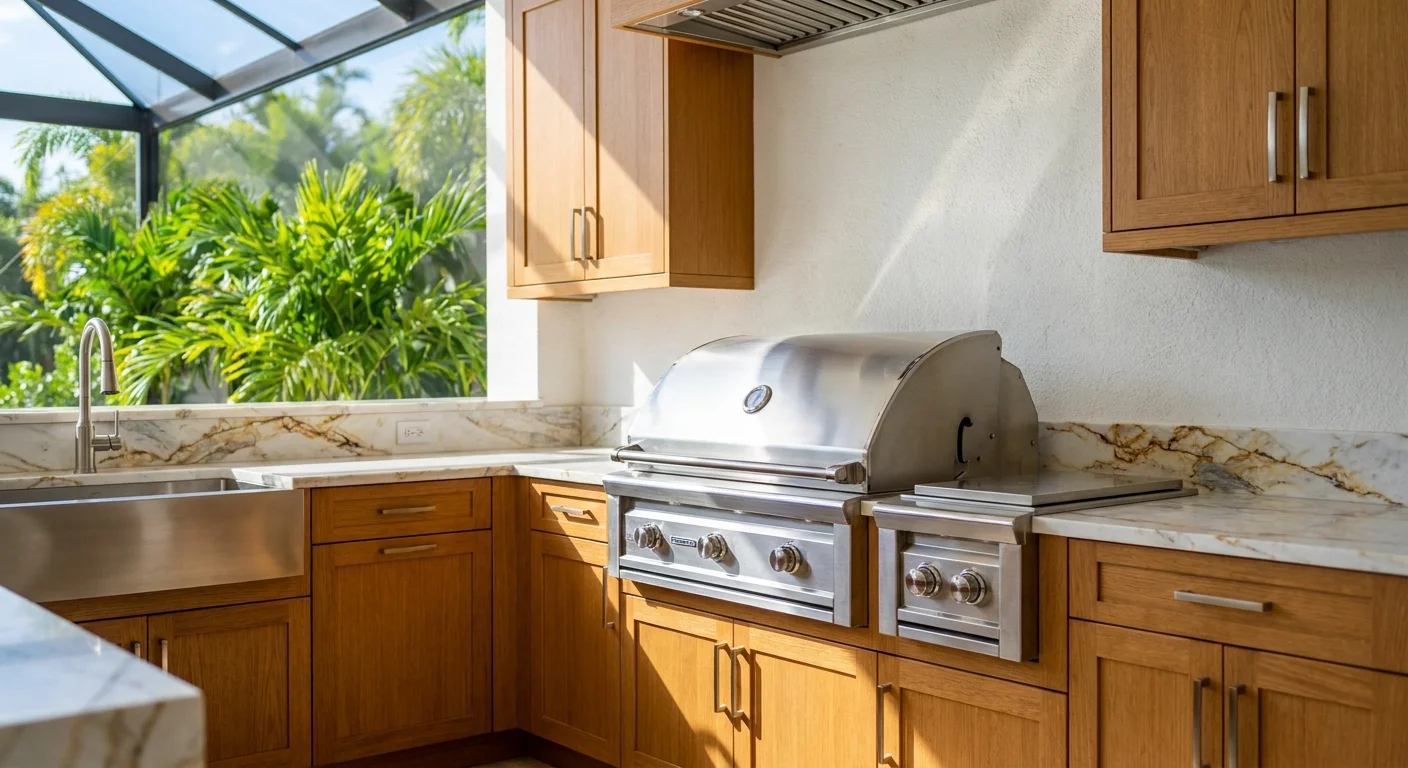
Experience Naples luxury living with XL Homes
View Our Portfolio- Material and color palettes: ARCs may restrict certain metals, high-glare finishes, or unusual roof colors that could distract golfers.
- Mass and height limits: Maximum height, minimum setbacks, and second-floor step-backs protect view corridors for neighbors and the course.
- Outdoor lighting control: Many clubs limit certain fixture types or brightness levels to protect dark skies and avoid glare on evening golfers or nearby homes.
These constraints do not necessarily add cost, but they can shift it. For example, a rejected flat tile may force a switch to a more expensive architectural material. Or a required set-back from the fairway may push your outdoor kitchen into a fully covered structure instead of a simpler open lanai.
6. Ongoing ownership costs: insurance, fees, and maintenance over 10+ years
Insurance: waterfront premiums vs golf course predictability
On the insurance side, waterfront homes in FEMA flood zones usually carry higher premiums for flood and wind coverage. Underwriting looks at elevation certificates, construction type, and proximity to open water. A concrete, impact-protected home built to current Florida Building Code will always fare better than an older structure, but the location risk remains.
Golf course homes, particularly those further inland in north Naples and Bonita Springs, often enjoy lower flood costs and more stable wind rates, although all of SWFL remains a high-wind region. For many XL Homes clients, this translates to a meaningful annual savings over a 10 to 20 year ownership period that can offset higher club dues.
HOA and club fees: two very different models
On the water, you typically see lower formal HOA fees but higher individual responsibility. You handle your own seawall repairs, dock upgrades, and canal-side landscaping. In non-gated waterfront neighborhoods, city services support the basics, but there is no master association maintaining your streetscape or shared amenities.
In golf communities, the equation flips.
- Master HOA: Pays for common area landscaping, entry security, private roads, and amenities, which shows up as a predictable monthly or quarterly fee.
- Club dues: Equity or non-equity membership structures add another layer of cost for golf, dining, and spa access.
- Special assessments: Course renovations, clubhouse expansions, or infrastructure upgrades can lead to periodic assessments.
Both models add up, just in different columns. Waterfront owners should plan for higher line-item repairs that come at irregular intervals. Golf course owners should expect steady fees with the occasional bump when the club redoes greens or expands facilities.
Maintenance: salt, sand, and turf impact on your finishes
Salt air on Port Royal or Moorings Bay eats into exterior metals, pool equipment, and even some stone if it is not carefully selected. Exterior repaint cycles tend to be shorter on high-exposure waterfront sites. Dock structures, boat lifts, and seawalls also need regular inspection and service.
On golf course lots, the stress is different.
- Fine dust and sand from bunkers find their way into lanais and sliders.
- Fertilizers and reclaimed water can affect plant selection along the course edge.
- Stray golf balls can occasionally damage screen enclosures or glass if design does not anticipate typical shot patterns.
These realities should influence your specifications: hardware finishes, outdoor cabinetry materials, screen types, and even the design of soffits and gutters. Thoughtful selections can shrink long-term costs regardless of whether you look at a fairway or a channel marker.
7. How XL Homes approaches design on waterfront vs golf course sites
Waterfront: structure, resilience, and view choreography
On the water, XL Homes typically starts with three non-negotiables: structural resilience, flood compliance, and view choreography. The team maps sightlines from kitchen, great room, primary suite, and upper-level spaces to capture curves in the canal or open bay pockets.
Common patterns on waterfront builds include:
- Raising the primary living level to optimize both elevation and view, sometimes with a split-level or partial elevated great room
- Designing outdoor living as a continuous extension of interior entertaining areas, with high-end outdoor kitchens and bar islands similar in finish level to the indoor space
- Investing heavily in custom lighting, as seen in our feature on custom lighting trends, to highlight water textures and boat traffic after dark
Golf course: symmetry, privacy, and managed views
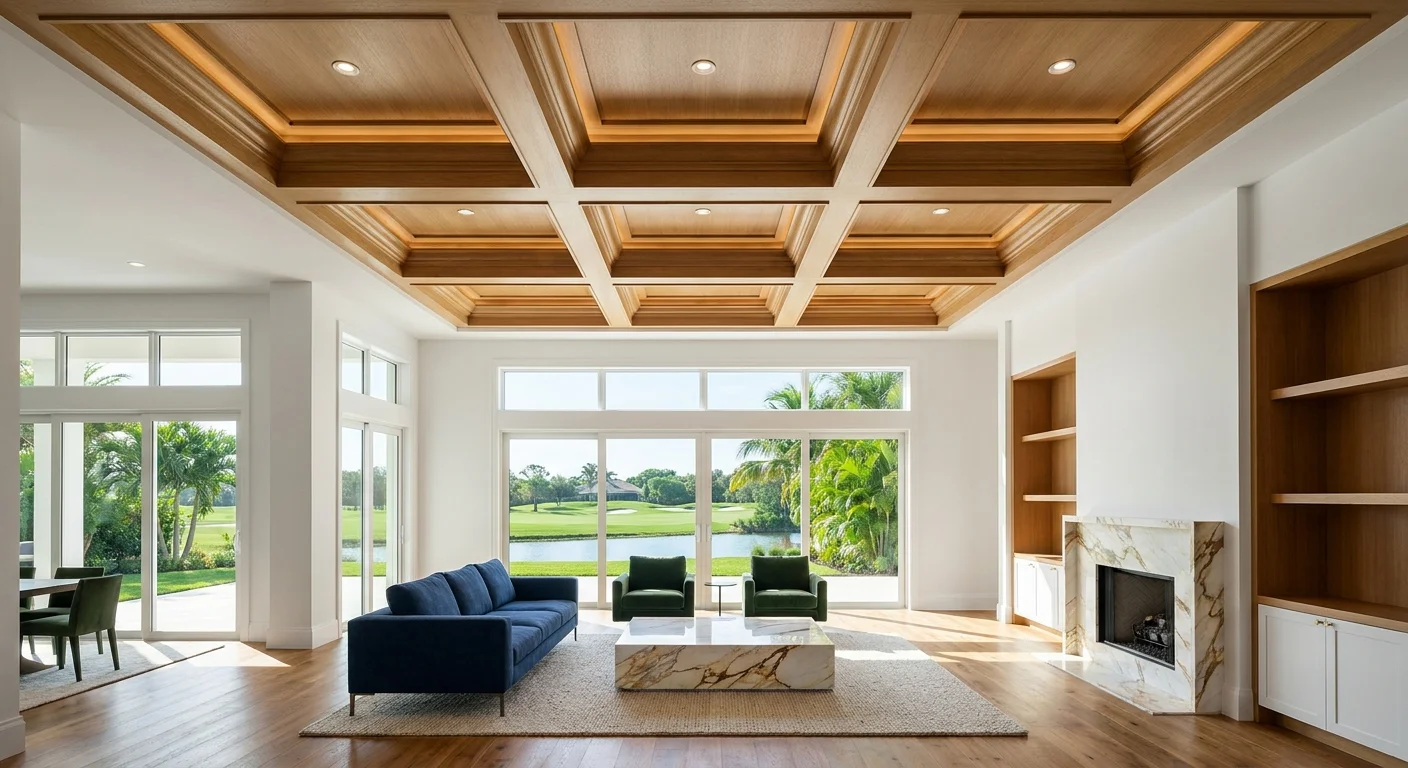
On golf course sites, XL Homes tends to treat the fairway like a framed landscape. You want the green and lake views, but you also want to feel private from players walking past and neighbors on the opposite side.
- Shaping courtyards and side gardens to buffer neighboring homes, so you are not exchanging direct window-to-window views
- Sculpting rooflines and covered outdoor areas to reduce glare toward the course and soften the view from across the fairway
- Using landscape elements and low walls to catch golf balls and define outdoor rooms without boxing in the view
This different design DNA shows up inside too. Many golf course buyers invest more into kitchens and interior detailing, like what we outline in 2026 luxury kitchen cabinet trends in Naples, because the course provides a refined but not overpowering backdrop. On the water, the view often steals more of the budget.
8. Which is right for you: a practical decision framework
If you are torn between a lot in Port Royal and a lot in Grey Oaks, here is a simple lens XL Homes often uses with clients.
Choose waterfront if you:
- Own or plan to own a boat large enough that daily or weekly use justifies premium location
- Are comfortable with higher upfront structural costs and potentially higher insurance to gain direct water access
- Value ever-changing horizons, passing boats, and proximity to the Gulf more than club culture
- Are prepared for more hands-on responsibility with seawalls, docks, and marine contractors
Choose golf course if you:
- Play golf regularly or want the social structure of a club lifestyle
- Prefer more predictable ongoing costs via HOA and club dues rather than sporadic big-ticket marine repairs
- Want strong views without the full force of coastal wind, flood, and salt exposure
- Plan to put more budget into interior finishes and amenities instead of extreme structural systems
Next steps: compare real numbers before you commit to a lot
Both waterfront and golf course homes in Naples deliver a high level of luxury. The key is to understand the full cost picture early, not just list price and club brochures. That means factoring in FEMA flood zone implications, Florida Building Code requirements, soil and piling needs, ARC standards, insurance, and maintenance patterns.
If you are looking seriously at both options, ask your builder to prepare a side-by-side budget outline for one specific waterfront lot and one specific golf course lot. Include lot prep, structure, envelope, outdoor living, and estimated 10-year ownership costs. With that in hand, your decision will shift from "water vs golf" to "which lifestyle and cost structure actually fits how I live."
In Naples, luxury is a given. The smartest move is choosing the setting where the hidden costs align with what you value most day to day.
XL Homes of SWFL is a family-owned custom home builder in Naples, Florida. Explore our luxury home portfolio, learn about our remodeling services, or schedule a free consultation.