
Mistakes To Avoid When Planning Outdoor Fireplaces In SWFL Luxury Homes
Outdoor fireplaces are signature features in Naples luxury homes, but small planning mistakes can create big safety, code, and comfort problems. Learn the common errors owners make in Southwest Florida and how to design a fire feature that is both stunning and compliant.
XL Homes Editorial Team
The XL Homes of SWFL editorial team brings you insights on luxury home building, interior design trends, and Southwest Florida living.
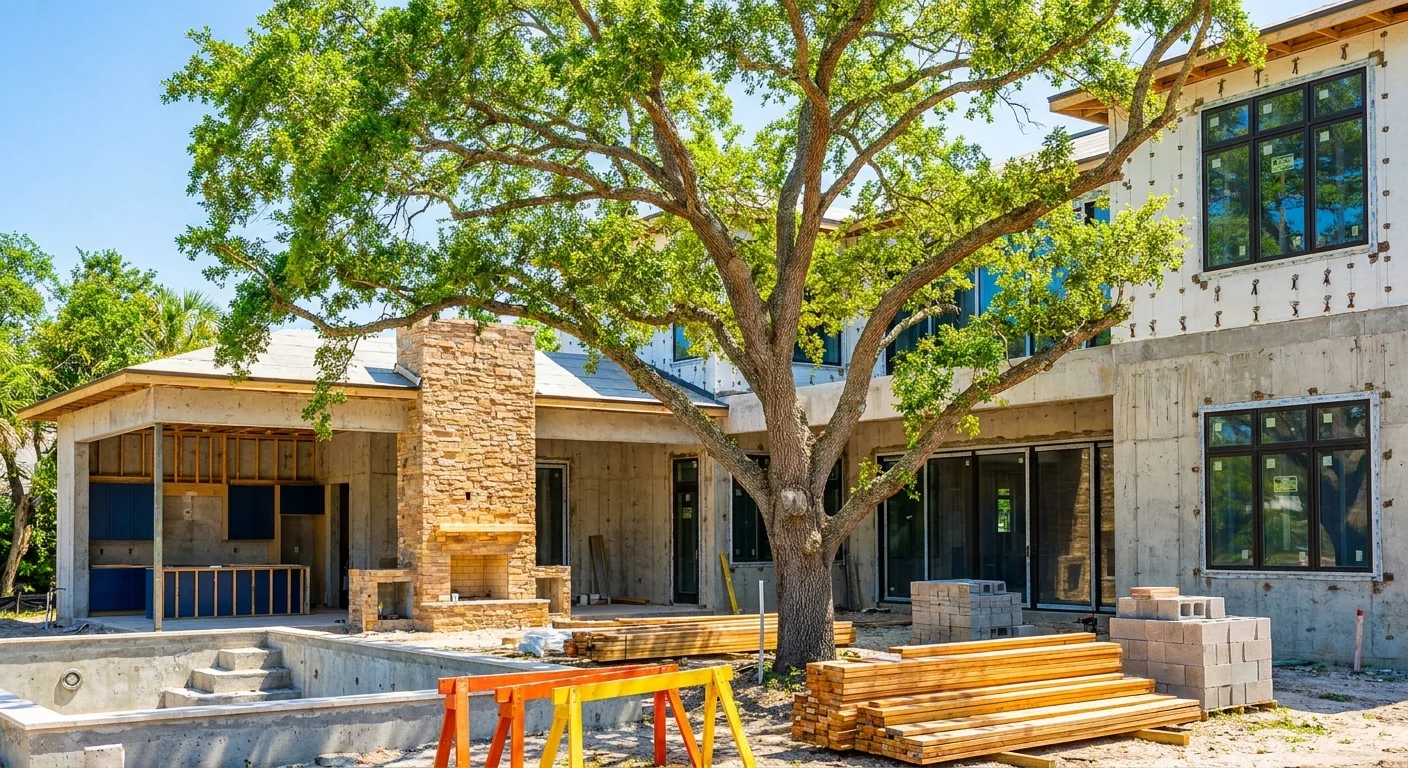
Why outdoor fireplace mistakes are amplified in SWFL luxury homes
Outdoor fireplaces in SWFL luxury homes carry more risk than most owners realize. In Naples, Port Royal, Aqualane Shores, Park Shore, and Pelican Bay, you are mixing open flame, salt air, wind, strict Florida Building Code rules, and high property values in one compact space.
When planning outdoor fireplaces in SWFL luxury homes, the biggest mistake is treating them like simple decor. In reality, they are fire structures that must satisfy design, safety, and flood regulations or they can compromise insurance, permitting, and resale value.
Mistake 1: Ignoring Florida Building Code and fire regulations
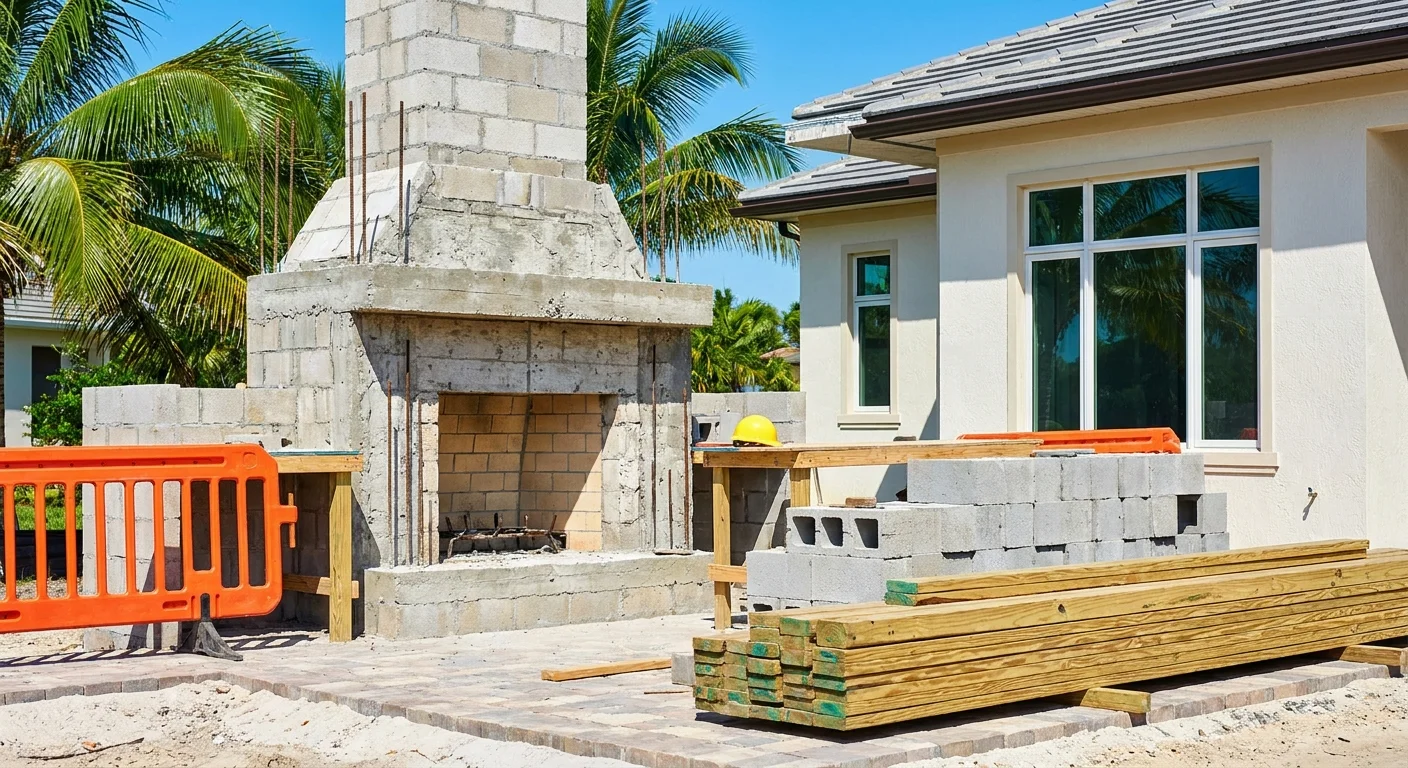
The fastest way to turn a gorgeous fire feature into a liability is to ignore the code side. Outdoor fireplaces and permanent grills in Florida are not casual additions, they are regulated fire appliances.
According to the Florida State Fire Code, outdoor fireplaces, permanent barbecues, and grills require prior approval from the Authority Having Jurisdiction (your local building or fire department). They must be maintained in safe condition, and their openings must have spark arresters, screens, or doors. The Florida Building Commission recommendations on outdoor fireplaces outline these expectations in detail.
Warning: Building an outdoor fireplace without AHJ approval is treated like any other unpermitted structure. It can trigger fines, require expensive retrofit, and stall a future sale when the buyer's inspector flags it.
In Collier County, permanent gas lines, masonry chimneys, and structural elements for fire features all require permits. Many homeowners assume factory-built gas units are exempt because they arrive as "appliances." Once you frame them into a wall or chimney mass, the structure and the gas work fall under the Florida Building Code.
The smart approach is to coordinate your designer, builder, and mechanical contractor from the start. That is the same integrated strategy we recommend for complex interiors like luxury kitchen cabinet layouts in Naples homes, and it applies just as directly outdoors.
Mistake 2: Forgetting FEMA flood rules and insurance eligibility
Many of Naples luxury neighborhoods sit in Special Flood Hazard Areas. That includes much of Port Royal, Aqualane Shores, Old Naples west of 3rd Street, and bayfront tracts in Park Shore and The Moorings.
The City of Naples makes it clear that compliance with the National Flood Insurance Program (NFIP) and the Florida Building Code is required to preserve flood insurance eligibility. Structural elements, including outdoor fireplaces, must not interfere with flood risk mitigation or violate permitting rules. The city's own flood mitigation guidelines for property owners spell this out.
Typical fireplace mistakes in these zones include:
- Building massive masonry fireplace walls below the Base Flood Elevation that obstruct flood vents or flow paths.
- Anchoring heavy chimney structures to non-engineered slabs that could fail in surge or undermine foundations.
- Adding storage or built-in cabinetry under the fire structure in ways that violate enclosure rules below design flood elevation.
When FEMA maps show your house in an AE or VE zone, your designer must treat the outdoor fireplace like any other structural addition. That often means lighter framed chimneys, elevated hearth conditions, or carefully detailed piers that respect flood openings.
In Naples flood zones, an outdoor fireplace is not just a design feature. It is a structural decision that can support or sabotage your long-term insurance strategy.
Owners who have already upgraded for resilience, such as adding impact glazing to cut premiums as covered in our impact window and insurance guide for Naples homes, should hold the same standard for fire features. Anything that conflicts with NFIP expectations risks reversing those hard-earned savings.
Mistake 3: Poor placement in relation to wind, views, and neighbors
Southwest Florida wind patterns and humidity change how fireplaces feel and function. What reads well on a Pinterest board can smoke out your neighbors on Crayton Road or block your best sunset view down a canal in Aqualane Shores.
Common placement missteps include:
- Putting the fireplace directly in the view corridor. In Park Shore gulf-front units and bayfront single-family lots, you pay for water and sky. A tall chimney or TV wall with fire at the center can slice that in half.
- Ignoring prevailing breezes. On the west side of town, afternoon seabreeze often pushes smoke and heat back toward the house. Corner placements that looked ideal on paper sometimes send smoke directly into screened lanais.
- Backing right up to the property line. Your neighbor in Grey Oaks may not share your enthusiasm for wood smoke or late-night conversation. Side yard setbacks and privacy planning matter.
For gas fireplaces, smoke is less of an issue, but heat and light direction still count. Think about how you want to sit around the feature during a January evening when the temperature drops just enough to use it. A linear unit at the edge of the lanai can gently frame the view instead of blocking it.
Pro Tip: Stand on your lanai at 4 pm and again at 8 pm. Notice sun angle, glare, and breezes. Use those observations to choose a fireplace location that complements your natural patterns instead of fighting them.
Mistake 4: Oversizing or undersizing for the actual outdoor room
Scale is where luxury outdoor fireplaces often miss in Naples. Owners see a dramatic linear fireplace in a Mediterra model and assume the same 12-foot feature will work on their 18-foot-wide lanai in Old Naples. It rarely does.
Signs your fireplace is the wrong size:
- Seats feel crowded. If your fireplace elevation eats an entire wall, your seating is forced into a narrow "hallway" zone between fire and pool.
- Fire looks like a small stripe. A 36-inch opening lost in a 16-foot wall reads underwhelming from across a large loggia.
- TV is out of comfortable viewing height. To squeeze in fire, stone, and screen, many layouts push the TV up so high that neck strain becomes part of the experience.
The goal is visual balance. In expansive outdoor great rooms, a double-sided or see-through design can bridge zones instead of dominating one wall. In more modest lanais common in Pelican Bay high-rises, a compact vertical fireplace with flanking shelving or art can hit a luxurious note without overwhelming the space.
When you plan whole-property upgrades, pairing scale decisions for fire features with other projects, such as a lanai expansion or partial remodel, can control cost and visual impact. The cost logic is similar to consolidating interior upgrades that we explore in our analysis of whole-home remodel costs in Naples.
Mistake 5: Choosing the wrong fuel for SWFL conditions
Fuel choice is often emotional. Many seasonal residents from the Midwest or Northeast want the crackle of a wood fire. SWFL conditions, insurance realities, and code requirements sometimes tell a different story.
Consider these factors before you commit:
- Wood-burning fireplaces require spark arresters, screens, or doors under Florida State Fire Code. They produce embers that can carry in wind, especially on bay, canal, or golf-course lots with open exposure.
- Gas fireplaces offer cleaner operation, easier control, and better compatibility with screened lanais and tight setbacks, but they demand professional gas design and installation.
- Hybrid or multi-fuel systems can add complexity that inspectors and insurers scrutinize more closely.
In dense luxury pockets like Old Naples and Moorings, neighborhood context often favors gas units that minimize smoke drift. In larger estate settings like the estates in Quail West or Talis Park, wood can be viable if carefully detailed. A knowledgeable local builder will also cross-check your choice with current insurance carrier preferences.
Mistake 6: Underestimating corrosion and salt-air maintenance
Salt air in Naples is relentless. Anything metal that lives outdoors, especially within a mile or two of the Gulf or Naples Bay, needs protection. Fireplaces add combustion byproducts to that mix.
Common construction errors include:
- Using standard steel framing or fasteners instead of stainless or properly coated options.
- Skipping regular cleaning of burner elements, pilot assemblies, and doors, which allows buildup that corrodes components faster.
- Specifying cheaper vent caps or rain hoods that rust and stain stucco in the first few seasons.
Talk with your contractor about marine-grade finishes and components, especially if you are on Gordon Drive, Galleon Drive, or any waterfront in Port Royal. The upfront cost premium is minor compared with replacing a corroded unit or dealing with stained stonework on a six-figure outdoor living area.
Mistake 7: Forgetting seating, circulation, and real-world use
Many outdoor fireplaces in SWFL are technically impressive but rarely used. The problem is usually not the fire, it is the furniture plan and circulation.
Design missteps to avoid:
- No clear primary seating group. If your main sofa grouping faces the view or TV and backs the fire, the fireplace becomes a backdrop, not an experience.
- Walkways cutting through the conversation zone. In narrow lots from Park Shore to Vanderbilt Beach, traffic from house to pool often cuts straight through where you want people to relax.
- Fire too far from pool or kitchen. In practice, owners use fireplaces after dinner. If the zone is isolated from the outdoor kitchen and dining, it will be forgotten.
When planning the outdoor room, map the full experience, not just the fire wall. Where are drinks staged, where does food land from the grill, which chairs get the best breeze and view. That is the same user-centric thinking that drives successful primary suite layouts, as we explore in our guide to primary suite expansion mistakes in SWFL homes.
Mistake 8: Overcomplicating media walls and technology
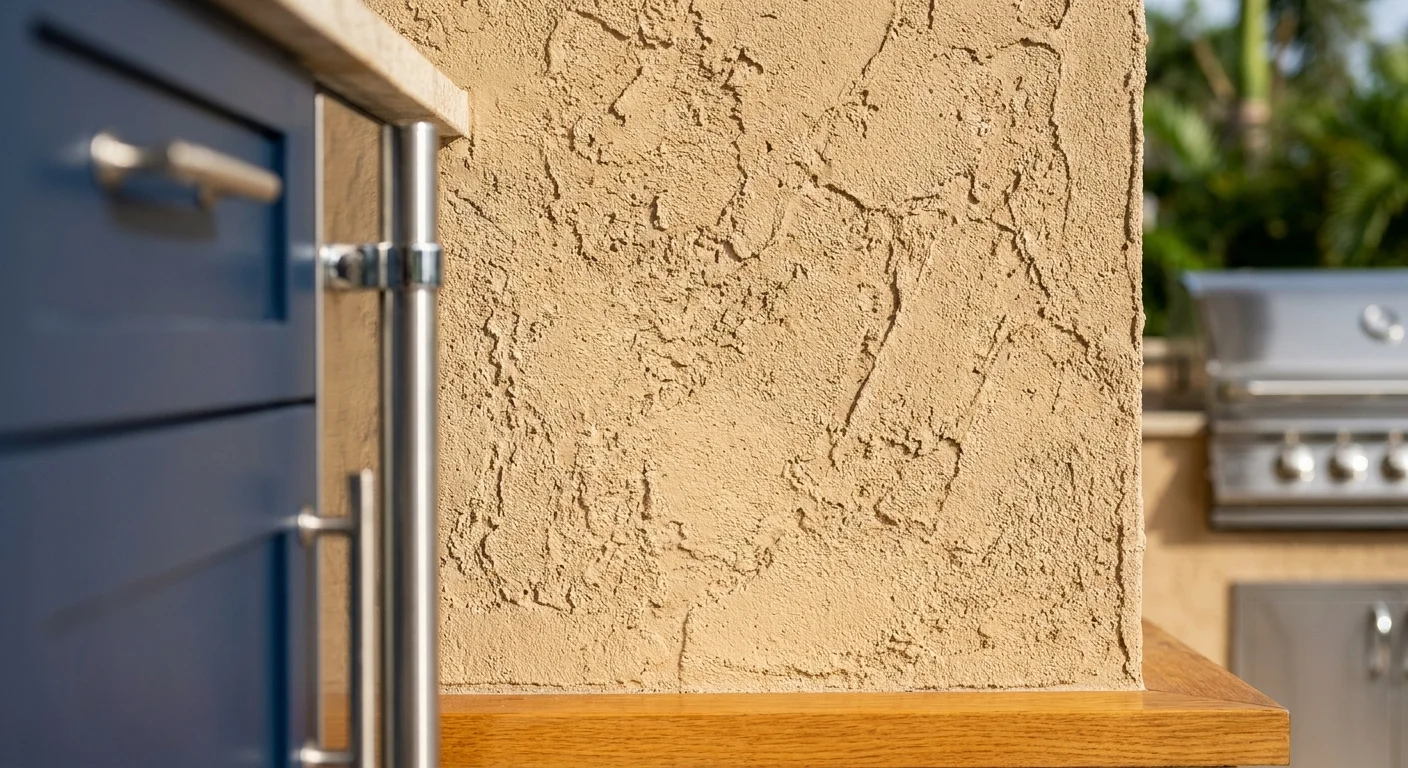
The modern Naples fireplace is often a stacked feature. Fire below, TV in the middle, speakers or art above, all integrated into an outdoor media wall. Complexity is not a problem by itself, but lack of technical planning is.
Frequent technical oversights include:
- Inadequate heat protection behind the TV. Without proper clearances and heat deflection, components fail early in humid, hot conditions.
- Power and data run as an afterthought. Retrofitting conduit into finished stone or stucco is messy and expensive.
- Glare and brightness ignored. That perfect TV location often becomes unwatchable at 3 pm without shading or anti-glare screens.
Work backward from your technology expectations. Decide on TV size, audio, and control system early, then let the fireplace design respond to those dimensions. Your builder can pull from best practices used in other highly detailed outdoor rooms such as those highlighted in many of the projects similar to our luxury outdoor living spaces overview.
Mistake 9: Treating the fireplace as a standalone project instead of part of a permit set
In Collier County, fragmented projects often cost more and face more scrutiny. Outdoor fireplaces that start as "small additions" have a way of expanding into low walls, shade structures, kitchens, and spa modifications.
Launching the fireplace as a standalone project can cause issues:
- You may need multiple permit revisions as the scope grows, each one adding time.
- Inspectors may flag inconsistencies between existing as-built conditions and what is shown on a small fireplace permit.
- The design might not coordinate with future plans for screen enclosures, pool expansions, or hardscape changes.
In a luxury setting, you rarely regret treating the outdoor fireplace as part of a comprehensive outdoor living permit set. That approach also simplifies review in sensitive areas such as Port Royal, where architectural standards and neighborhood expectations are high.
Mistake 10: Overlooking long-term resale and buyer expectations
Today's Naples buyer, especially in prime locations like Port Royal, Old Naples, and Park Shore, expects turnkey outdoor living. A poorly executed fireplace can feel more like a project than an asset.
Resale-sensitive mistakes include:
- Highly specific stylistic choices that lock the house into a narrow aesthetic.
- Noncompliant construction that surfaces in inspection and forces last-minute concessions.
- Layouts that fight current buyer preferences for open lanai, covered living, and seamless pool integration.
In golf communities like Grey Oaks and Mediterra, where many buyers compare multiple homes in the same week, thoughtful outdoor fire features can tip decisions. On the Gulf or bay, where views carry the premium, your fireplace should amplify that story, not compete with it.
How to plan a compliant, livable outdoor fireplace in Naples
Avoiding mistakes is not about stripping away drama or luxury. It is about putting structure under the romance of fire so your feature works for decades, not just for the listing photos.
For most SWFL luxury homeowners, the ideal planning sequence looks like this:
- Confirm your flood zone and elevation. Use Collier County and City of Naples resources, including local flood mitigation guidelines, to understand constraints.
- Engage a design-build team with Naples experience. They should know Florida Building Code fire requirements and the review habits of the local AHJ.
- Analyze wind, view, and circulation on your actual lot. Site-specific plans almost always perform better than copying a model home.
- Decide fuel type based on code, insurance, and lifestyle. Gas dominates for ease and compliance, wood works in select contexts with proper detailing.
- Integrate the fireplace into a full outdoor living concept. Coordinate with kitchen, pool, spa, shading, and technology.
If you already own in SWFL and are considering a larger rework, it can be efficient to bundle the fireplace with other upgrades like lanai expansion, primary suite improvements, or kitchen updates. Coordinated planning gives you better control over budget, permitting sequence, and design continuity.
The end result should feel inevitable, as if the house was originally built with that fire feature in mind. With attention to Florida codes, FEMA expectations, site conditions, and how you truly live, your outdoor fireplace can become the heart of your Naples home instead of its problem child.
XL Homes of SWFL is a family-owned custom home builder in Naples, Florida. Explore our luxury home portfolio, learn about our remodeling services, or schedule a free consultation.